
Picture a still January afternoon in Rockingham: the mercury is climbing, the sea breeze hasn’t arrived yet, and the house is sealed up with the air conditioner humming. It feels comfortable inside, but all that closed-up, moisture-laden coastal air has nowhere to go, and your soft furnishings quietly soak it up. Knowing how these warm, damp conditions behave helps residents get far more value from a professional carpet cleaning service and keep their carpets fresh right through the season.
Summer moisture is a different challenge to the gritty problem of sand tracked in from local beaches and dunes. Sand you can see and vacuum. Humidity works invisibly, settling deep in the fibres and underlay where it lingers for days.
Prefer to watch or listen?
Listen onApple Podcasts
Why Summer Humidity Affects Rockingham Carpets Differently
Carpet fibres and the underlay beneath them are absorbent by nature. In cooler, drier months, any moisture that reaches them tends to evaporate reasonably quickly. In summer, when the surrounding air already holds a high level of moisture, evaporation slows dramatically.
That means water from spills, cleaning or general indoor dampness stays trapped for longer. The underlay is often the real culprit, holding moisture out of sight long after the surface feels dry to the touch. Coastal suburbs close to the water tend to notice this more, as the air near the shore carries more humidity than inland areas.
The Link Between Damp Carpets, Musty Odours, Mould and Dust Mites
Warmth and moisture together create ideal conditions for the things you least want in a carpet. When fibres stay damp, several problems can develop:
- Musty odours that seem to appear from nowhere and cling to the room.
- Mould and mildew, which take hold in the dark, humid space between carpet and underlay.
- Dust mites, which thrive in warm, humid environments and settle deep in soft furnishings.
These issues rarely announce themselves early. A faint stale smell is often the first clue that moisture has been sitting for too long. Left unchecked, damp carpet can affect indoor air quality and comfort, which matters most in the very months families spend more time indoors escaping the heat.
How Humidity Slows Drying After Cleaning
Every carpet cleaning method introduces some moisture. The key is removing as much of it as possible and helping the rest evaporate fast. In humid summer conditions, the air can only absorb so much extra water vapour, so drying naturally takes longer than in winter.
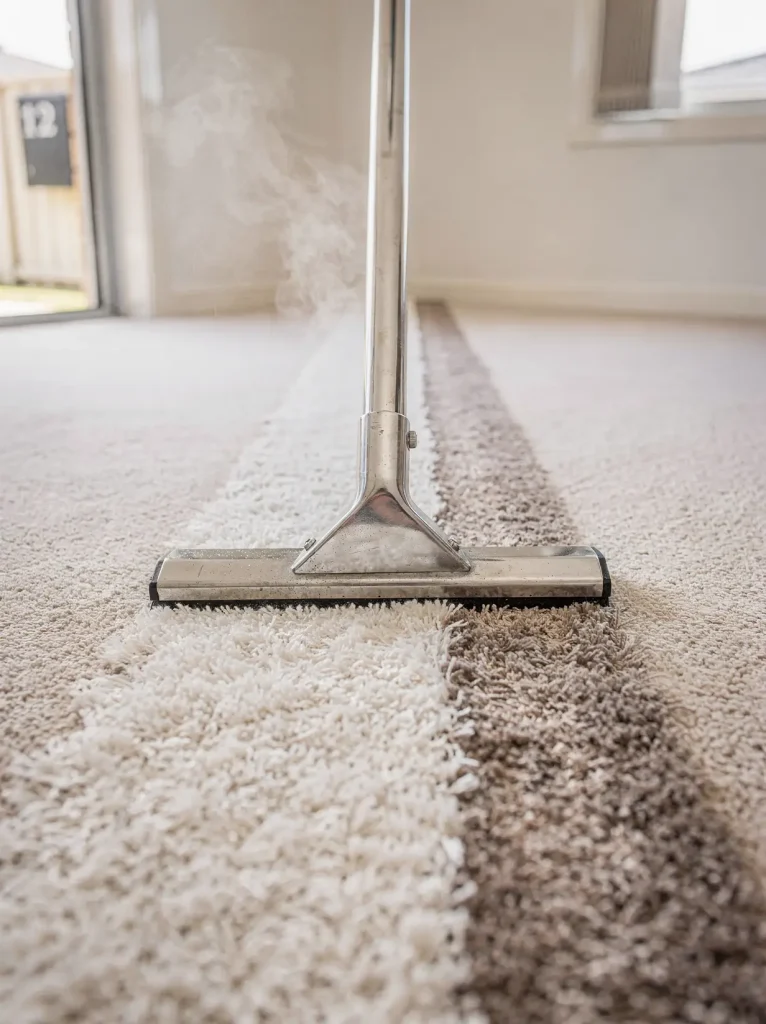
This is where technique matters. Thorough hot water extraction is designed to draw out the bulk of the moisture at the point of cleaning, rather than leaving it to evaporate slowly. Strong extraction combined with good airflow makes the difference between carpets that dry in hours and carpets that stay damp long enough for odours to develop. Rushing the drying stage, or over-wetting the carpet in the first place, works against you in a humid climate.
Best Timing and Practices for Summer Carpet Cleaning
Timing your clean well can shorten drying time considerably. A few practical approaches help in a coastal humid climate:
- Clean earlier in the day, giving carpets the maximum number of daylight hours to dry.
- Choose a day with lower humidity or a reliable sea breeze rather than a still, muggy one.
- Keep windows open and fans running during and after cleaning to encourage air movement.
- Avoid heavy foot traffic on freshly cleaned carpet until it is fully dry underneath, not just on the surface.
There is a common belief that carpets should only be cleaned in the cooler months. In reality, summer cleaning works well when the process suits the conditions, with proper extraction and attention to airflow.
Everyday Habits to Reduce Indoor Moisture
Keeping carpets fresh through summer starts long before a professional clean. Small daily habits reduce the moisture load in your home. Use exhaust fans in bathrooms and the kitchen, dry wet shoes and towels away from carpeted areas, and let fresh air move through the house on breezy days.
Air conditioning helps by cooling and dehumidifying the air, but only when the home stays reasonably sealed and the unit is maintained. A poorly serviced system can add its own moisture problems. Vacuuming regularly also removes trapped debris that holds dampness against the fibres.
Signs Your Carpet Is Holding Too Much Moisture
Your carpet often tells you when moisture has built up. Watch for these signs:
- A persistent musty or damp smell, especially in closed rooms.
- Carpet that feels cool or slightly damp underfoot well after any spill.
- Discolouration or dark patches near skirting boards or under furniture.
- Increased sneezing or irritation among household members indoors.
When these signs appear, a professional refresh with strong extraction can reset the carpet, remove trapped moisture and clear the conditions that odours and allergens depend on.
Managing summer humidity is a big part of keeping a Rockingham home’s carpets healthy, but it is only one piece of the picture. Households sharing their space with animals face their own considerations, and caring for carpets in homes with pets brings a fresh set of habits worth understanding as you build a year-round routine.