
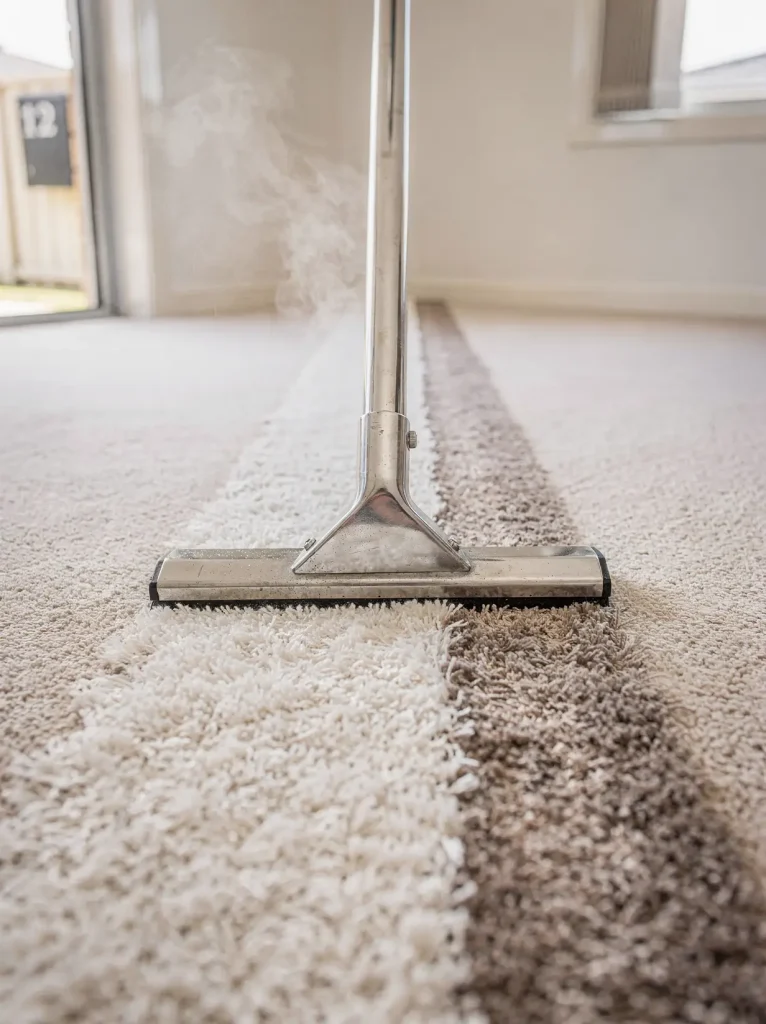
You’ve decided your carpets need a proper professional clean. The very next question that trips up most homeowners is which method to use. When people start comparing options for carpet cleaning in Rockingham, WA, they usually run into two main choices: hot water extraction, often called steam cleaning, and dry or low-moisture cleaning. Neither is universally better. The right pick depends on your carpet, your household and what you actually want the clean to achieve.
This guide walks through how each method works, how they compare head-to-head, and how to match the approach to your specific situation.
Prefer to watch or listen?
Listen onApple Podcasts
How Hot Water Extraction Works
Hot water extraction injects heated water and a cleaning solution deep into the carpet pile under pressure. This loosens dirt, oils and residue that have worked their way down toward the base of the fibres. A powerful vacuum then pulls the water back out, taking the suspended soil with it.
The key point is that the dirt doesn’t just get shifted around on the surface. It gets flushed out of the pile and extracted. That makes hot water extraction well suited to carpets carrying a heavier load of embedded grime, allergens and ground-in traffic marks. Because it reaches deeper, it tends to be the method of choice when a carpet hasn’t been cleaned in a long time.
The trade-off is moisture. This method introduces more water into the carpet, so the fibres need time to dry afterwards.
How Dry and Low-Moisture Cleaning Works
Dry cleaning is a slight misnomer, since a small amount of moisture is still involved. These low-moisture methods use specialised compounds, pads or foams that attract and bind dirt, which is then agitated through the carpet and removed by vacuuming.
The main appeal is speed and convenience. Because far less water is used, carpets are typically ready to walk on again much sooner. That matters in busy households and workplaces where a room can’t be out of action for long.
Low-moisture cleaning does an excellent job on lighter soiling and general refreshes. Its limitation is depth. It works largely at and near the surface, so it’s less aggressive at pulling out dirt that has settled deep into the pile.
Comparing Depth, Moisture and Fibre Suitability
When you place the two methods side by side, a clear pattern emerges across three factors.
- Deep-clean depth: Hot water extraction reaches further into the pile and lifts more embedded soil, while dry methods focus on the upper layers.
- Moisture levels: Dry cleaning leaves carpets with minimal moisture and shorter recovery time; extraction leaves more water behind.
- Fibre and construction: Some carpet types, older weaves and delicate natural fibres respond better to gentler, lower-moisture handling, while sturdy synthetics generally cope well with extraction.
This is why blanket advice like “steam is always best” can lead you astray. The construction and condition of your carpet matter as much as the level of dirt sitting in it.
Matching the Method to Your Household
Your living situation often points clearly to one method over the other.
- Kids and pets: Homes with young children and animals tend to build up deeper soiling, spills and odours, which suit the flushing action of hot water extraction.
- Allergies and sensitivities: Extraction removes a larger share of trapped dust, dander and allergens from within the pile, which many allergy-prone households prefer.
- Heavy soiling versus light refresh: Deeply soiled carpets benefit from extraction, while a carpet that simply needs freshening up is a natural fit for low-moisture cleaning.
- Turnaround needs: If a room needs to be back in service quickly, the faster recovery of dry cleaning is a genuine advantage.
Residential Versus High-Traffic Spaces
Method selection also shifts depending on where the carpet lives. In a typical family home, periodic deep extraction paired with the occasional light refresh often works well. The right rhythm ties in with how frequently your carpets are cleaned in the first place.
Commercial offices, hallways and other high-traffic areas can be a different story. These spaces often can’t afford long downtime, so low-moisture methods that keep the area usable are frequently favoured for maintenance, with periodic deeper extraction scheduled when the space allows.
Why Professional Assessment Beats Guesswork
The most reliable way to choose is to have the carpet read before any cleaning begins. A professional looks at the fibre type, the backing and construction, the age and condition of the carpet, and the nature of the soiling. Those details determine which method will clean effectively without risking damage.
Guessing from a website description alone can lead to using too much moisture on a delicate carpet, or a surface-only clean where a deep flush was really needed. Reading the carpet first removes that risk and matches the method to reality.
One of the biggest practical differences between the two methods is how much moisture ends up in the carpet once the job is done. That naturally raises the question of how long carpets take to dry in our local conditions, which is where planning around drying really pays off.