
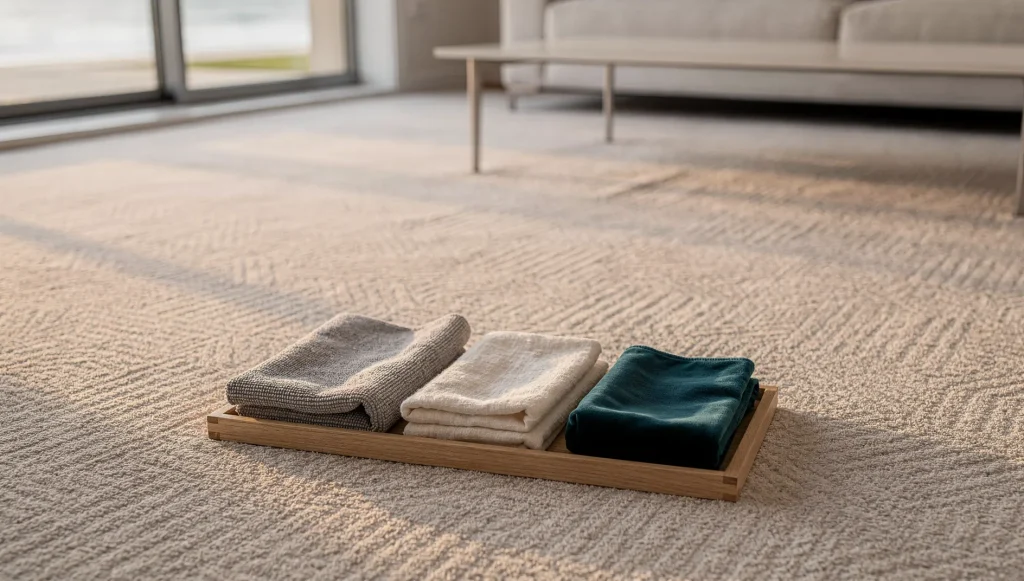
Few things frustrate a homeowner more than wiping down a lounge and ending up with a patchy water ring, a crushed patch of pile or a stubborn mark that was not there before. It usually happens for one reason: the same cleaning method gets used on every fabric in the house. The microfibre linen velvet fabric cleaning differences are real and practical, because each of these materials reacts to water, pressure and brushing in its own way. Understanding how they differ is the foundation of any effective upholstery cleaning service, and it is the quickest way to stop causing the very marks you are trying to remove.
This guide assumes you already know which fabric you are working with. Instead of covering how to identify a mystery material, it focuses on the consequences of that fabric choice once you pick up a cloth.
Why Fabric Type Changes Everything
Three variables decide the right approach to any soft furnishing: pile, weave and fibre source. Pile is the raised surface of a fabric, like the soft nap on velvet. Weave describes how tightly the threads sit together, which controls how far liquid can spread. Fibre source matters because synthetic threads shrug off moisture, while natural fibres can swell, shrink or discolour when they get wet.
Change any one of these and the safe method changes with it. That is why a confident wipe that rescues a synthetic couch can ruin a natural-fibre one.
Microfibre: The Durable, Family-Friendly Performer
Microfibre is a synthetic fabric with a tight, short pile made from very fine threads. That dense surface is what makes it such a practical choice for busy Perth households with kids and pets. Spills tend to sit on the surface rather than soak straight through, which buys you time to respond.
Because the fibres are synthetic, microfibre generally tolerates water and gentle brushing well. Light surface work usually does the job: blot a spill promptly, work from the outside of the mark inward, then use a soft brush to lift and reset the pile once it dries. Over-wetting is still worth avoiding, but microfibre is far more forgiving than the natural fabrics below. Its durability and easy maintenance are a big part of why so many families choose it.
Linen: The Natural Fibre That Marks Easily
Linen sits at the opposite end of the scale. It is a natural fibre with a flat, visible weave and no protective pile, which means every mark and every damp patch shows plainly. Water is the main hazard here. Apply too much and you risk a water ring, where the moisture carries dust and residue to the edge of the damp area and leaves a tell-tale halo as it dries.
Natural fibres also carry a shrinkage risk. Soak linen and the threads can draw tight, distorting the weave and leaving the fabric looking puckered. A careful, controlled hand is essential: use the smallest amount of moisture that will work, blot rather than rub, and never flood the area. When a mark sits deep in that flat weave, aggressive scrubbing often spreads it rather than lifting it.
Velvet: Protecting the Pile Direction
Velvet is all about the pile. Its soft surface is made of short, dense fibres that all lean in one direction, called the nap. Catch the light and you can see that direction change across the fabric. The three big risks with velvet are crushing, water spotting and brushing against the nap.
Crushing happens when pressure flattens the pile so it reflects light differently, leaving a patch that looks darker or worn. Water spotting is similar to linen’s water ring problem, because moisture disturbs how the pile sits. The fix is to work gently, always brush in the direction of the nap rather than against it, and let the fabric dry fully before lifting the pile back into place with a soft brush. Heavy-handed cleaning is the fastest way to leave a velvet lounge looking patchy.
A Practical Side-by-Side
Matching your response to the fabric makes the differences easy to remember:
- Microfibre: blot spills quickly, tolerates light water and gentle brushing, reset the pile when dry. The most forgiving of the three.
- Linen: use minimal moisture, blot never scrub, watch for water rings and shrinkage. The least forgiving of water.
- Velvet: work gently, brush with the nap, dry fully before touching, guard against crushing and spotting.
The same principle applies across other furniture surfaces too. If your home mixes fabric lounges with leather pieces, remember that caring for a leather sofa follows a completely different set of rules again.
When Home Maintenance Reaches Its Limit
Routine care handles most everyday marks, but every fabric has a point where home methods stop being safe. Set-in stains, large spills, water rings that have already formed, or any sign of crushing or shrinkage are signals to pause. On delicate linen and velvet in particular, repeated attempts often cause more lasting damage than the original mark.
Professional treatment matches the moisture level, tools and drying method to the fabric, which protects the surface while still lifting the stain. When the stakes are a favourite lounge, that controlled approach is worth it.
Still, knowing your fabric is only half the picture. The surest guide to the safe cleaning method is often printed on the furniture itself. Before you touch any lounge, it pays to check the small manufacturer tag and its letter codes, because those few letters tell you exactly how much water and what kind of cleaning the maker intends the fabric to take.