
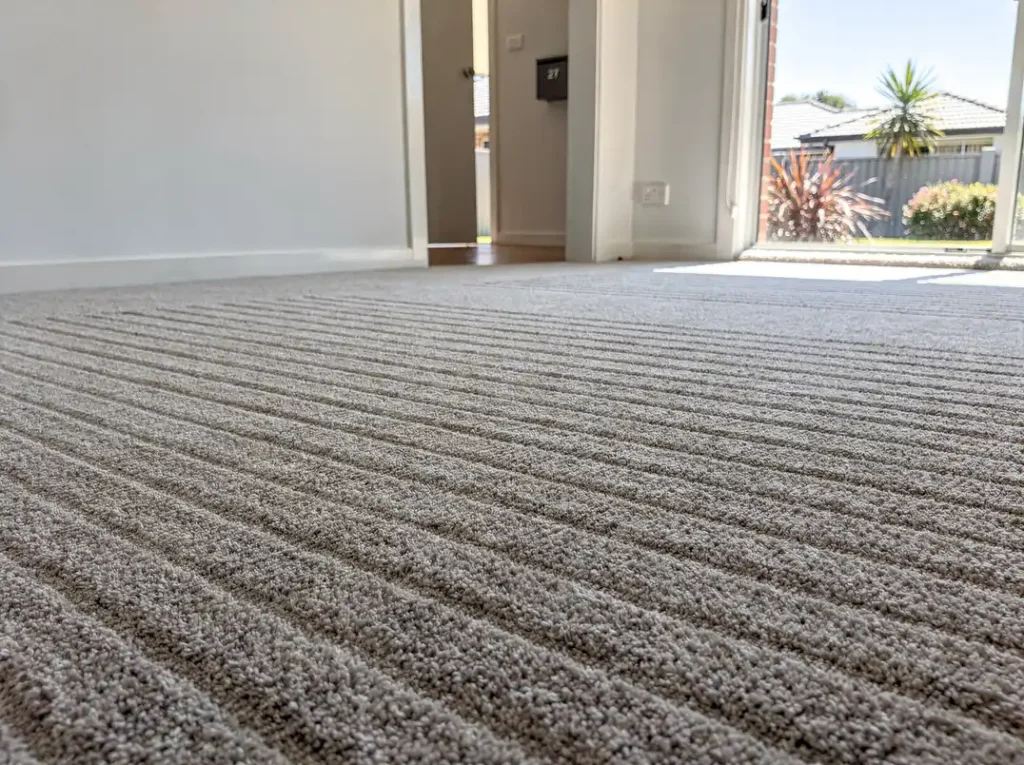
You’re standing in the supermarket cleaning aisle, or eyeing a hire machine near the checkout, wondering whether to spend a Saturday scrubbing the lounge room yourself. It’s a fair question. Some carpet jobs are genuinely DIY-friendly, and there’s no reason to pay someone for a task you can handle in ten minutes. Other jobs, though, call for a professional carpet cleaning service to avoid wasted effort, wasted product, and the frustration of a carpet that looks worse than when you started. The trick is knowing which situation you’re actually in.
What DIY Carpet Cleaning Actually Involves
DIY carpet cleaning usually falls into two camps. The first is store-bought products: spray-on spot removers, foaming cleaners, and powder deodorisers you sprinkle and vacuum up. The second is hiring a machine, often a small extraction unit you fill with water and detergent, push across the carpet, and return the next day.
Both have a place. Store products are cheap and fast for surface issues. Hire machines apply water and suction, so they do more than a spray bottle. But it helps to be realistic about their limits. A hire unit produces far less suction and heat than commercial equipment, which changes how much soil it lifts and how wet the carpet stays afterwards.
Where DIY Genuinely Works
Plenty of everyday carpet care is best done yourself. There’s no need to book anyone for the small stuff.
- Fresh spills: A drink knocked over five minutes ago blots up easily. Acting fast is far more effective than any deep clean weeks later.
- Light spot treatment: A single food mark or a muddy footprint on an otherwise clean carpet responds well to a careful home spot clean.
- Surface freshening: Regular vacuuming and the occasional deodoriser keep carpets presentable between deeper cleans.
For these jobs, DIY isn’t a compromise. It’s the sensible choice. Reaching for professional help every time you spill coffee would be overkill.
The Limits of DIY
Trouble starts when home methods get pushed beyond what they can do. The most common problem is over-wetting. Hire machines and enthusiastic scrubbing leave more moisture in the carpet and underlay than weak suction can pull back out. In our WA climate, damp carpet that can’t dry quickly becomes a real mould and odour risk, especially through cooler, wetter months.
Residue is the second issue. Many home detergents leave a sticky film behind because there isn’t enough rinsing power to remove it. That film attracts dirt, which is why a freshly “cleaned” carpet can start looking grubby again within days.
Then there’s embedded soil. Grit and fine dust work their way down to the base of the fibres, where surface treatments simply can’t reach. You lift the top layer, the carpet looks better for a while, and the deeper soil stays put and keeps grinding against the fibres.
What Professional Hot Water Extraction Does Differently
Professional hot water extraction tackles the exact areas where DIY struggles. High-temperature water is injected into the carpet under pressure to loosen embedded soil, then powerful suction pulls the water, detergent, and dislodged dirt straight back out in a single pass.
That stronger extraction matters for two reasons. It removes more of the deep soil that home methods leave behind, and it removes far more of the moisture, so carpets dry in a controlled, sensible timeframe rather than staying damp for days. A professional also matches the treatment to the fibre type, which reduces the risk of shrinkage, colour bleed, or texture damage.
Cost, Time and Effort Compared Honestly
DIY looks cheaper on paper, and for small jobs it usually is. But the “cheaper” route hides some real costs when it’s applied to a whole-house clean:
- Re-soiling: Detergent residue means the carpet gets dirty faster, so you’re cleaning again sooner.
- Redoing the job: A disappointing result often means a second attempt, or a professional clean anyway – paying twice.
- Your time: A full DIY clean eats most of a day, plus a trip to collect and return the machine.
- Potential damage: Over-wetting or the wrong product can cause problems that cost more to fix than the clean would have.
None of this makes DIY wrong. It just means the sums only add up when the job genuinely suits it.
A Practical Way to Decide
You don’t need a hard rule, just a quick gut-check before you start. Ask yourself a few things:
- Is this a fresh, contained spill or a single small mark? Handle it yourself.
- Is the whole carpet dull, gritty, or holding odour despite regular vacuuming? That’s embedded soil, and it points to professional extraction.
- Am I dealing with delicate fibres, a large area, or heavy staining I can’t identify? Leave it to someone equipped for it.
- Can the room dry quickly if I add water? If ventilation is poor, be cautious with any wet method at home.
Match the method to the problem and you’ll rarely waste money in either direction.
Whichever route you choose, the result only lasts if the carpet is looked after day to day. A deep clean gives you a fresh starting point, but simple, correct habits between cleans are what preserve it and reduce how often deeper intervention is needed. Learning to look before you commit to a cleaner pairs well with knowing how to protect that work afterwards, which is really about keeping carpets fresh between deeper cleans through everyday upkeep.